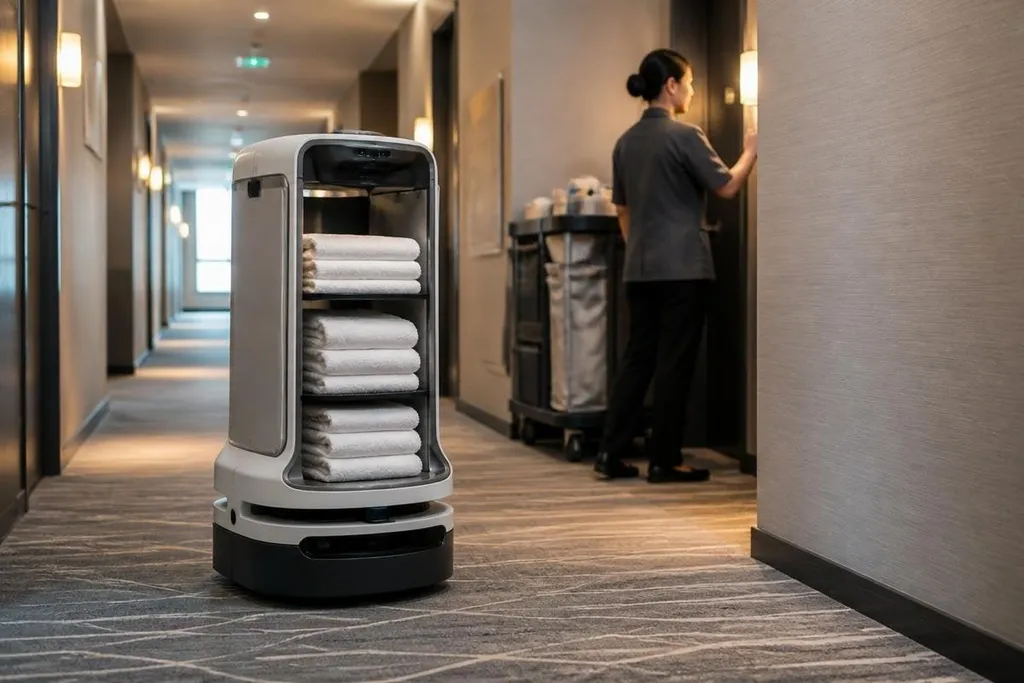
A hotel robot that carries towels is easy to show. The harder test is getting the right items to the right room, at the right time, without adding work for staff. The next wave of hospitality robots will need to fit into that daily process.
- Room delivery must end with a clear handoff.
- Staff need a fast way to fix errors.
- A robot’s price must match the work it completes.
The task comes before the shape
Hospitality covers many jobs, so one robot design won’t fit every site. One site may need transport between floors, while a restaurant may need table delivery or help with stock movement. The useful question is the task, not whether the robot looks human.
That task should have a clear start and finish. Staff load the robot, the system receives a destination, the robot moves through the building, and a person gets the items.
Each step needs a way to confirm what happened. A robot that carries clean towels but leaves them outside the wrong room has not finished the job. The hotel still needs a worker to check the order, find the right room, and explain the delay to the guest.
The building is part of the robot
Hotels and restaurants are full of people, doors, lifts, narrow spaces, wet floors, and changing layouts. A robot working in one building must deal with those conditions as part of its normal operation.
That calls for sensors that detect people and objects, software that builds a map of the route, and a safe response when the route changes. The robot also needs a clear way to stop when a person presses an emergency button or blocks its path.
Lift access can decide the value of a hotel robot. If a staff member must guide it between floors each time, the robot may move goods but still leave the main task with a person. A connection to the lift system can remove that extra step, but the building owner must approve and maintain the connection.
The small details matter. A charging point that blocks a service corridor creates a new problem. A door that needs a staff access card can stop a delivery. These are site checks, not brochure features.
Staff need control when plans change
A guest may change a room request. A restaurant may run out of one item. A lift may stop working. Hospitality robots need a simple screen or control panel that lets staff change the route, pause a job, and call the robot back.
The handoff needs the same care. A delivery could use a room code, a staff card, or a message on the robot’s screen. The system should record who collected the items without storing more guest data than the job needs.
A hotel team needs more than a polished delivery demo. Hotel robotics reporting from Robot24.com can show how a named robot handled room access and guest handoff during daily service, including cases that needed staff help. That record sets up the next issue: remote help when the robot reaches a case it can’t handle.
Remote help can keep a robot moving when it meets a case its software cannot handle. That person still needs a clear view of the robot’s cameras and map, along with a way to stop the machine. A remote operator should fix unusual cases, not guide every delivery.
The price must match the shift
A hotel or restaurant manager needs to compare the robot with the work it replaces or reduces. The calculation includes the robot, charging equipment, software, repairs, staff training, and any building changes.
A robot that runs only during quiet hours may have a smaller job than one used across a full shift. That can still make sense if the task is repetitive and the robot needs little help. The result depends on actual delivery counts, travel time, and staff involvement.
Public demonstrations rarely show those numbers. They may show a robot reaching a room or carrying a tray, but they may not show loading, cleaning, charging, failed routes, or guest questions. Those missing steps decide the cost.
A buying check for hospitality teams
Before a pilot, check these points:
- Name the task: Write down the item, destination, handoff, and expected number of jobs per shift.
- Walk the route: Check doors, lifts, floor changes, charging space, and places where guests gather.
- Measure staff time: Record loading, supervision, error handling, cleaning, and recovery work.
- Set stop rules: Decide when a person must take control and how staff stop the robot.
- Count the data: List what the system stores about guests, staff, routes, and deliveries.
- Price the full setup: Include hardware, software, building changes, repairs, and training.
I'd skip a hospitality robot that cannot show its error rate and staff time during a live site trial. A smooth video says little about the hundreds of ordinary jobs that decide the purchase.
The next useful proof will come from hotels and restaurants publishing job counts, human interventions, repair records, and cost per delivery. Until those figures appear, the safest test is simple: watch the robot finish the whole task, from loading to handoff.